Keychain: The Elegant Script Font for Personal Touches
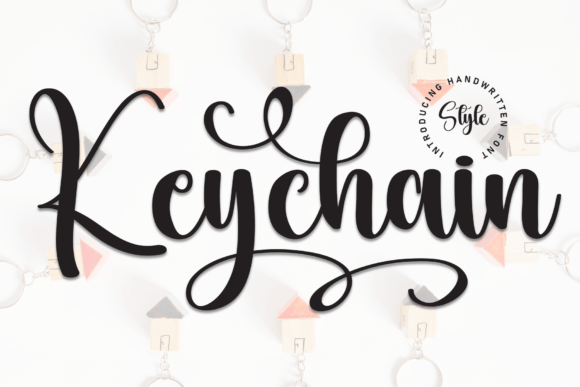
When you need a design to feel immediate, personal, and crafted with care, the typeface you choose does the heavy lifting. Keychain is a stylish script font that captures the essence of elegant handwriting. It’s smooth, flowing, and perfect for invitations, logos, and designs that need a personal, creative touch. But its value extends far beyond a pretty letterform; it's a versatile creative font that can infuse warmth and authenticity into a wide range of projects.
Understanding the Visual Personality of Keychain
At its core, Keychain is a script font designed to mimic the fluidity of natural handwriting. It avoids the rigid, uniform strokes of many digital fonts, instead offering subtle variations in line weight that give it a human, organic feel. The connections between letters are smooth and intentional, creating a rhythm that guides the eye along a line of text. This isn't a casual, messy scrawl; it's a handwritten font with a refined, sophisticated edge. Its personality is approachable yet polished, making it suitable for both personal and professional applications where you want to convey creativity and attention to detail.
Compared to a traditional serif font or a clean sans serif font, Keychain occupies a specific niche. It’s a display font, meaning it shines brightest in headlines, short phrases, and logo lockups rather than body copy. Think of it as the accent piece in your typographic toolkit—the element that adds character and draws focus. Its elegance comes from its simplicity and flow, not from excessive flourishes or complex swashes that can hinder readability.
Where Keychain Truly Shines: Practical Applications
The strength of a premium font like Keychain lies in its ability to adapt to different contexts while maintaining its core identity. Here’s where it works exceptionally well.
Branding and Logo Design: For businesses that want to project a handmade, boutique, or artisanal quality, Keychain is a powerful choice. A bakery, a wedding planner, a craft studio, or a personal coach could use it for their logo design to instantly communicate a personal, client-centered approach. It helps build a brand identity that feels authentic and memorable. When paired with a simple, geometric sans serif font for body text, it creates a beautiful and professional contrast.
Marketing and Digital Content: In the fast-paced world of digital marketing, grabbing attention is key. Keychain can make social media graphics, email headers, and website call-to-action buttons stand out. It’s perfect for quotes, testimonials, or featured product names in an e-commerce layout. For social media graphics, its handwritten style can increase engagement by feeling more personal and less corporate than standard web fonts. It’s a fantastic tool for adding visual hierarchy and a creative spark to web design elements.
Publishing and Editorial Design: Magazines, blogs, and book covers often use display fonts to create a mood. Keychain is ideal for chapter titles, pull quotes, or feature article headers in editorial design. It can soften the tone of a publication, making it feel more accessible and engaging. For a cookbook, it could be used for recipe titles; for a travel blog, for destination names.
Packaging and Print Collateral: Physical products benefit immensely from thoughtful typography. In packaging design, Keychain can highlight product names, flavors, or special ingredients, giving the product a shelf presence that feels premium and carefully curated. It’s equally effective for business cards, thank-you notes, and stationery, reinforcing a brand’s personal touch at every customer interaction point.
Personal and Creative Projects: Beyond commercial use, Keychain is a joy for personal projects. It’s perfect for creating custom invitations, greeting cards, scrapbook elements, or digital planners. For crafters and hobbyists, it’s a valuable design asset that adds a professional flair to handmade creations.
Integrating Keychain into Your Design Workflow
Choosing the right font is just the first step. Using it effectively requires some practical consideration. Here’s how to approach Keychain for your next project.
Evaluating Project Fit: Before selecting any font, define your project's goal and audience. Is the tone playful, elegant, rustic, or modern? Keychain fits best with projects that benefit from a human, handcrafted, or elegant aesthetic. If your brand is about cutting-edge technology or ultra-minimalist efficiency, a different typeface might be more appropriate. Always consider readability first—while Keychain is beautiful, it’s not designed for long paragraphs of small text.
Mastering Font Pairing: The true power of a script font is unlocked through smart pairing. Because Keychain is expressive, it balances beautifully with more neutral, structured fonts. A classic pairing is with a clean sans serif font like Montserrat or Lato. The contrast creates a clear visual hierarchy, with Keychain for emphasis and the sans serif for clarity. You could also pair it with a sturdy serif font for a more traditional, yet still personal, feel. Always test your pairings at the actual sizes you’ll use to ensure they harmonize.
Considering Readability and Size: As a display font, Keychain performs best at larger sizes. Use it for headlines, subheadings, logos, and short phrases. Avoid using it for body copy, legal text, or any information that needs to be read quickly and effortlessly. At small sizes or in long strings of text, the connected nature of script fonts can reduce legibility. Always prioritize your audience's ability to read your message easily.
Exploring Font Styles and Licensing: A quality commercial font often comes with multiple styles or weights. Check if Keychain includes alternates, swashes, or different weight options that can give you more flexibility in your designs. Furthermore, understand the licensing. For any project that will be distributed, sold, or used commercially—like a client’s logo, a product package, or a monetized blog—ensure you have the correct commercial font license. This protects both you and the font designer and is a mark of professionalism.
Ultimately, Keychain is more than just another script font. It’s a tool for storytelling. It allows designers, entrepreneurs, and creators to inject personality and warmth into their work, bridging the gap between digital precision and human touch. By understanding its strengths and applying it thoughtfully, you can use Keychain to create designs that don’t just look good, but feel genuinely connected to your audience.